
Do PPF Really Make Your Surfaces ‘Scratch-Proof’? Debunking Myths
PPF has become one of the most talked-about solutions for protecting furniture, countertops, stone, glass, leather, fabric, and other interior surfaces. Many homeowners invest in a high-quality ppf coating expecting a near-indestructible, “scratch-proof” finish.
Online claims and demo videos often reinforce this perception, showing coated surfaces resisting light abrasion or cleaning tests without visible damage.
But how true are these claims?
In this blog, we break down the reality behind PPF, explain what they actually do, and clear up the most common myths. If you are considering PPF coating for home surfaces or already have it applied, this guide will help you set the right expectations.
What Is PPF?
PPF is a transparent, durable thermoplastic urethane film applied to the home surfaces to act as a physical barrier against damage.
This layer enhances surface properties such as:
- Water repellency (hydrophobic effect)
- Resistance to contaminants
- Improved gloss and smoothness
- Protection against daily wear, spills, and some environmental exposure
The “Scratch-Proof” Claim Explained
One of the biggest misconceptions about PPF coating is that it makes surfaces scratch-proof. This idea largely comes from marketing language such as “9H hardness.”
What Does 9H Actually Mean?
The “9H” rating often used in ppf coatings refers to the pencil hardness test, not the Mohs hardness scale used for minerals.
- It measures resistance to a graphite pencil scratch
- It does not mean the coating is as hard as glass, metal, or diamonds
- It does not indicate complete immunity to scratches
Myth vs Reality: Is PPF Scratch Proof?
Myth: PPF Make Surfaces Completely Scratch-Proof
This is not true.
Even high-quality PPF cannot prevent:
- Deep scratches from sharp objects like Scissors or knives
- Impact damage or surface chips
Reality: PPF provides Scratch Resistance
PPF can improve resistance to light surface marring and everyday wear, especially from routine cleaning and regular use.
Examples include:
- Light marks caused during routine wiping or cleaning
- Low-level abrasion from dust and fine particles
- Minor wear from everyday contact on frequently used surfaces
This happens because the coating:
- Creates a smoother surface
- Reduces friction during contact
- Helps reduce visible wear from routine use and cleaning
How PPF Actually Protects Surfaces
- Creates a Protective Layer
When applied, PPF forms a bonded barrier over the surface.
This layer:
- Shields the base material from contaminants
- Helps reduce visible wear from routine use
However, since this layer is thin, it cannot absorb heavy force or sharp impacts.
- Reduces Friction
PPF make surfaces smoother and slicker. This reduces the likelihood of scratches during routine cleaning.
- Repels Dirt and Water
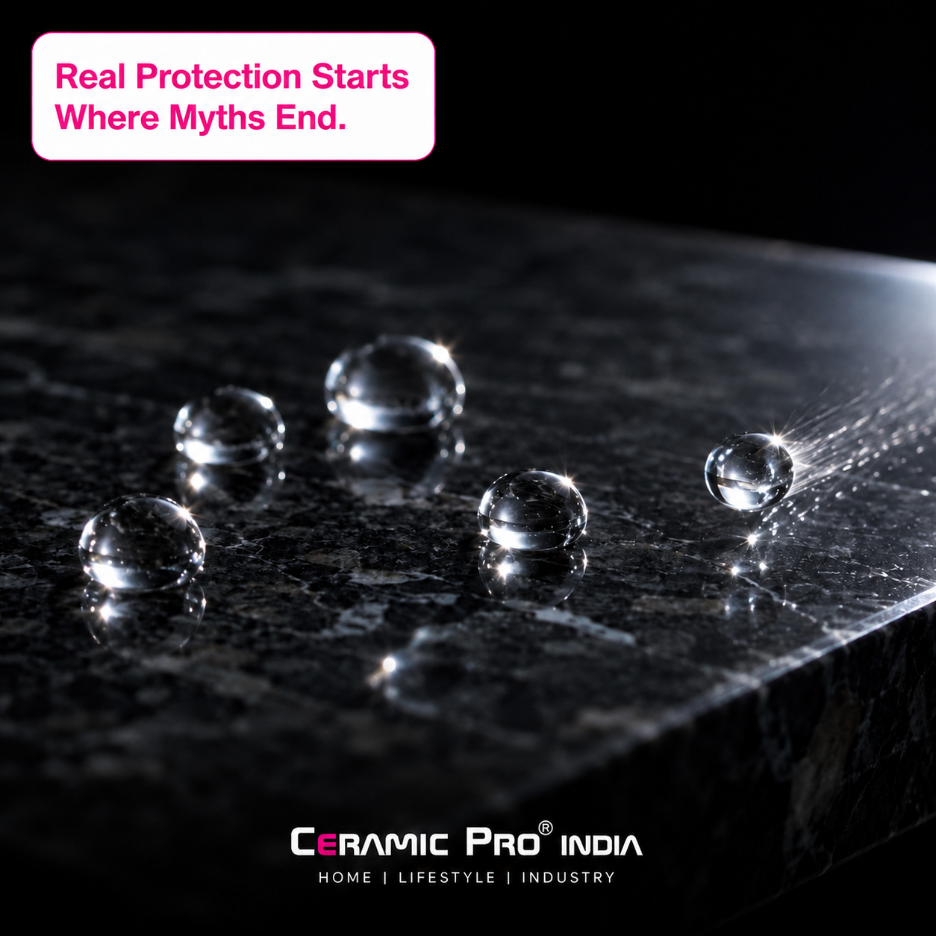
The hydrophobic nature of PPF causes water to bead and roll off.
This prevents:
- Dirt accumulation
- Hard particle buildup
- Increased abrasion during cleaning
- Protects Against Chemical Damage
PPF resist:
- Acidic and alkaline substances
- Food spills, oils, and common household contaminants
- Harsh environmental pollutants
What PPF Cannot Do
PPF cannot:
- Prevent deep scratches from sharp objects
- Make soft materials hard
- Stop damage from heavy impacts
Why the “Scratch-Proof” Myth Still Exists
There are a few reasons why this misconception continues:
- Marketing Language
Terms like “9H hardness” and “ultimate protection” can lead people to assume complete scratch resistance.
- Controlled Demonstrations
Many videos show:
- Light contact tests
- Clean environments
- Ideal conditions
These tests do not reflect real-world situations where surfaces face dust, debris, and constant wear.
When PPF Really Makes a Difference
Even though it is not scratch-proof, PPF provides significant real-world benefits.
- Daily Wear Protection
For everyday use, ceramic coating:
- Reduces visible wear from routine cleaning
- Helps limit light abrasion in day-to-day use
- Maintains surface clarity
- Easier Maintenance
Surfaces coated with PPF require:
- Less scrubbing
- Less frequent cleaning
- Reduced chemical use
- Long-Term Appearance Retention
PPF s help maintain:
- Gloss and shine
- Color depth
- Surface smoothness
- Environmental Protection
The coating protects against:
- UV discoloration
- Pollution
- Surface dulling and fading
How to Maximize Scratch Resistance
While PPF cannot make surfaces scratch-proof, proper care helps maximize its effectiveness.
Best practices include:
- Use microfiber cloths for cleaning
- Avoid abrasive tools and brushes
Why PPF Is Still Worth It
Even without being scratch-proof, PPF remains one of the most valuable surface protection solutions available.
Ceramic Pro Home positions its solutions around long-term care, easier maintenance, resistance to stains and wear, and preserving the look and feel of interior surfaces.
This combination of protection and appearance makes PPF a practical choice for homeowners who want to preserve valuable interior surfaces with less day-to-day maintenance.